
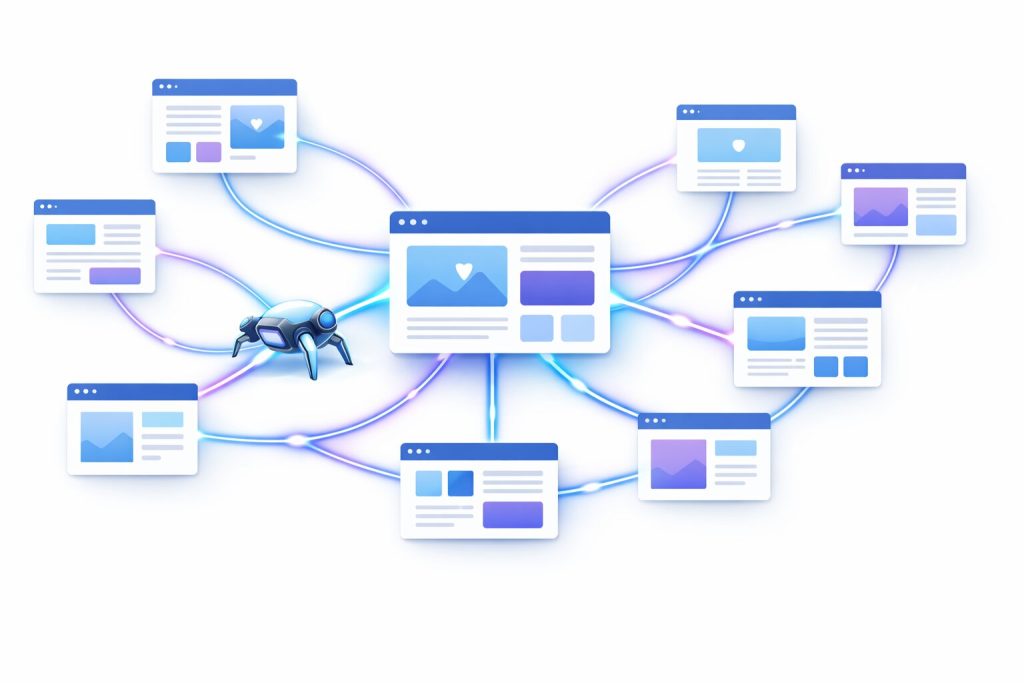
Internal linking is one of the most powerful yet underutilized SEO strategies. While backlinks often steal the spotlight, internal links quietly shape how search engines crawl, understand, and rank your website. When done strategically, advanced internal linking can significantly improve keyword rankings, distribute authority efficiently, and strengthen topical relevance–without building a single new backlink.
This guide goes beyond basic internal linking practices. You’ll learn advanced techniques that modern SEO professionals use to boost rankings, improve crawl efficiency, and build topical authority at scale.
Understanding the SEO Power of Internal Linking
Internal links are hyperlinks that connect one page of your website to another page on the same domain. Unlike external backlinks, internal links are fully under your control, making them a reliable and scalable SEO lever.
From a search engine’s perspective, internal links serve three critical purposes. First, they help crawlers discover new pages. Second, they signal the relative importance of pages through link equity distribution. Third, they provide contextual clues about what a page is about through anchor text.
When a page receives multiple internal links with relevant anchor text, search engines interpret it as an important resource within a topic. Over time, this contributes to better indexation, stronger topical signals, and improved rankings.
How Internal Links Influence Rankings
Search engines use internal links to understand the structure and hierarchy of your website. Pages that are linked more frequently–and from authoritative pages–are considered more valuable.
Internal links help rankings by:
- Passing PageRank (link equity) from strong pages to weaker ones
- Reducing crawl depth so important pages are discovered faster
- Reinforcing keyword relevance through contextual anchors
- Helping search engines understand topical relationships
Unlike backlinks, internal links can be optimized, updated, and scaled continuously, making them a long-term SEO asset.
Internal Linking vs External Linking: Strategic Differences
External links depend on third-party websites, while internal links are fully within your control. This makes internal linking one of the safest SEO optimizations available.
While backlinks signal authority from outside your site, internal links amplify and distribute that authority internally. In many cases, improving internal linking alone can move a page from page two to page one–especially when backlinks already exist but are poorly distributed.
Internal linking becomes especially powerful when:
- You already have strong informational content
- Older pages have backlinks but low conversions
- New pages struggle with indexation or rankings
Advanced Internal Linking Principles You Must Follow
Relevance Over Quantity
Linking every page to every other page dilutes SEO value. Advanced internal linking focuses on relevance. Each link should make sense contextually and support the topic of both the source and destination pages.
Search engines analyze surrounding text, not just the anchor. When a link appears naturally within a relevant paragraph, it sends stronger semantic signals than links placed randomly.
Optimal Anchor Text Distribution
Anchor text is a powerful relevance signal, but over-optimization can be harmful. Advanced internal linking relies on diversified, natural anchors.
Instead of repeating the same exact-match keyword, use:
- Partial match anchors
- Semantic variations
- Natural language phrases
- Branded anchors where appropriate
This approach mimics natural linking patterns and reduces the risk of algorithmic suppression.
Crawl Depth Optimization
Crawl depth refers to how many clicks it takes to reach a page from the homepage. Pages buried deep in the site structure often receive less crawl attention and lower rankings.
Ideally, your most important pages should be accessible within three clicks. Advanced internal linking helps flatten site architecture by creating contextual paths to deeper pages.
Topic Clusters and Content Hub Linking Strategy
Topic clusters are one of the most effective internal linking frameworks for building topical authority.
A topic cluster consists of:
- One pillar page covering a broad topic
- Multiple cluster pages targeting subtopics
- Strong internal linking between all related pages
The pillar page links to all cluster pages, and each cluster page links back to the pillar and to other relevant cluster pages.
This structure helps search engines understand that your site comprehensively covers a topic, increasing the likelihood of higher rankings across multiple keywords.
Scaling Topic Clusters Effectively
As your content grows, internal linking within topic clusters prevents orphan pages–pages with no internal links pointing to them.
To scale safely:
- Add internal links whenever new content is published
- Update older cluster pages with links to new ones
- Periodically audit clusters to ensure full connectivity
Strategic Use of Contextual Internal Links
Not all internal links pass equal value. Contextual links placed within the main content carry significantly more weight than navigation or footer links.
Search engines treat in-content links as editorial endorsements, especially when they are surrounded by relevant text.
Link Placement Best Practices
Advanced internal linking considers placement carefully. Links placed higher in the content tend to be crawled earlier and may pass more value.
Best practices include:
- Placing important internal links above the fold
- Avoiding excessive links in a single paragraph
- Prioritizing user intent over SEO manipulation
Advanced Anchor Text Optimization Techniques
Anchor text should align with search intent rather than exact keywords alone. For example, instead of forcing “best internal linking strategy,” use anchors like “how internal links improve rankings” or “internal linking best practices.”
Advanced SEO strategies include:
- Mapping anchor text to keyword clusters
- Using question-based anchors for informational content
- Avoiding repetitive anchor patterns across pages
This approach strengthens relevance without triggering over-optimization filters.
Using Internal Links to Boost Page Authority
Some pages naturally accumulate more authority due to backlinks, traffic, or age. These pages are ideal sources for internal link equity redistribution.
By linking from high-authority pages to strategic “money pages,” you can significantly improve rankings without acquiring new backlinks.
How to Redistribute Link Equity Effectively
Effective link equity redistribution involves:
- Identifying pages with strong backlinks or traffic
- Adding contextual links to underperforming pages
- Updating older content with fresh internal links
This method works particularly well for commercial pages targeting competitive keywords.
Internal Linking for Faster Indexing of New Content
New pages often struggle to get indexed quickly. Advanced internal linking accelerates indexation by connecting new URLs to pages that are frequently crawled.
Linking new content from:
- High-traffic blog posts
- Homepage or category pages
- Recently updated content
…signals search engines to crawl and index new pages faster.
Advanced Internal Linking for Large and E-commerce Websites
Large websites face unique internal linking challenges, including crawl budget waste and duplicate URLs.
For e-commerce sites, internal linking should guide both users and search engines toward high-conversion pages while avoiding crawl traps.
Category and Product Page Linking
Effective e-commerce internal linking includes:
- Category pages linking to top products
- Blog content linking to relevant categories
- Cross-linking related products contextually
This approach improves both SEO performance and user experience.
Automating Internal Linking at Scale
Manual internal linking is ideal for small websites, but automation becomes necessary as content scales.
Automation should assist–not replace–strategic thinking.
Manual vs Automated Internal Linking
Manual linking offers precision, while automation saves time. A hybrid approach works best.
Automation is useful for:
- Identifying link opportunities
- Suggesting relevant pages
- Managing large content libraries
Manual review ensures links remain natural and user-focused.
Identifying and Fixing Internal Linking Issues
Even strong websites suffer from internal linking problems over time.
Common issues include:
- Orphan pages with no internal links
- Broken internal links
- Pages overloaded with unnecessary links
Regular audits help maintain a healthy internal link structure.
How to Perform an Internal Link Audit
A comprehensive audit includes:
- Mapping internal links across the site
- Identifying pages with low link counts
- Fixing broken or redirected links
- Improving anchor text relevance
Audits should be conducted quarterly or after major content updates.
Measuring the Impact of Internal Linking
Internal linking success should be measured, not assumed.
Key performance indicators include:
- Keyword ranking improvements
- Faster indexation rates
- Increased crawl frequency
- Improved organic traffic to linked pages
Tracking before-and-after performance helps validate your strategy.
Future of Internal Linking in SEO
As search engines shift toward entity-based and AI-driven understanding, internal linking will become even more important.
Future trends include:
- AI-powered internal link suggestions
- Entity-based internal linking
- UX-focused link placement
Websites that invest in structured, user-centric internal linking will maintain a competitive edge.
Advanced Internal Linking Best Practices Checklist
- Link based on topical relevance, not convenience
- Use diversified, natural anchor text
- Keep important pages within three clicks
- Update old content with new internal links
- Audit internal links regularly
Frequently Asked Questions (FAQ)
How many internal links should a page have?
There is no fixed number. Focus on relevance and usability. Long-form content can naturally support 10–30 internal links without issue.
Do internal links really improve rankings?
Yes. Internal links help distribute authority, improve crawlability, and reinforce topical relevance–all critical ranking factors.
Can internal linking replace backlinks?
No, but it can amplify the impact of existing backlinks and significantly improve rankings when used correctly.
Is automated internal linking safe for SEO?
It is safe when used carefully. Automation should support strategy, not create spammy or irrelevant links.
How often should internal links be updated?
Internal links should be reviewed whenever new content is published and audited every few months.
Conclusion
Advanced internal linking is one of the highest ROI SEO strategies available today. It requires no outreach, no link building costs, and no reliance on third parties–only strategic planning and execution.
By focusing on relevance, structure, anchor optimization, and authority distribution, internal links can dramatically improve rankings, crawl efficiency, and topical authority. When treated as an ongoing process rather than a one-time task, internal linking becomes a long-term competitive advantage.